

Pharm Ingredients
Aconite Root Extract
Aconite Root Extract Lappaconitine Hydrobromide Powder Supplier
About Aconite Root Extract
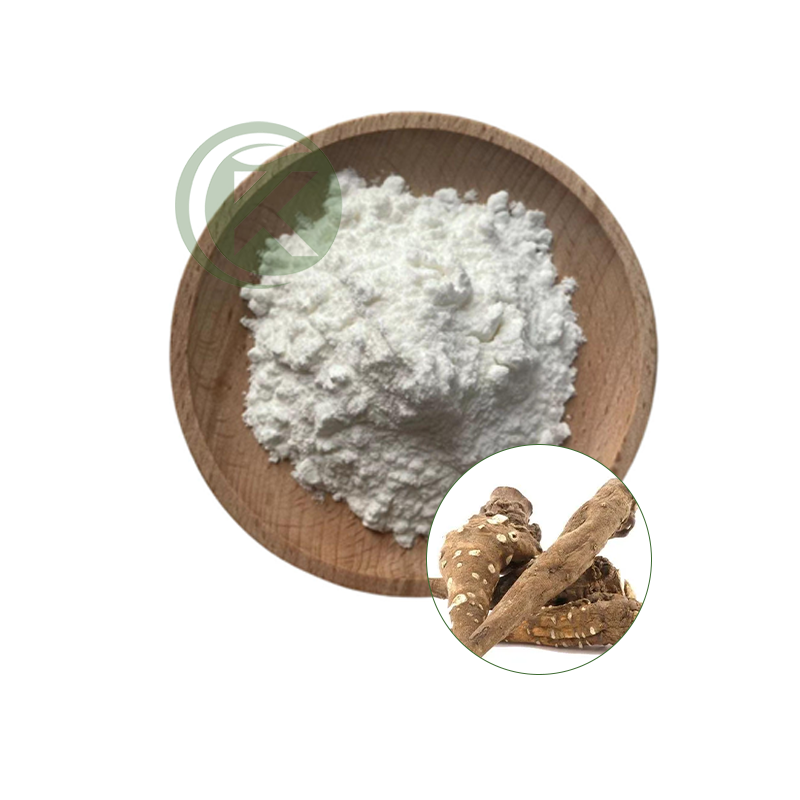
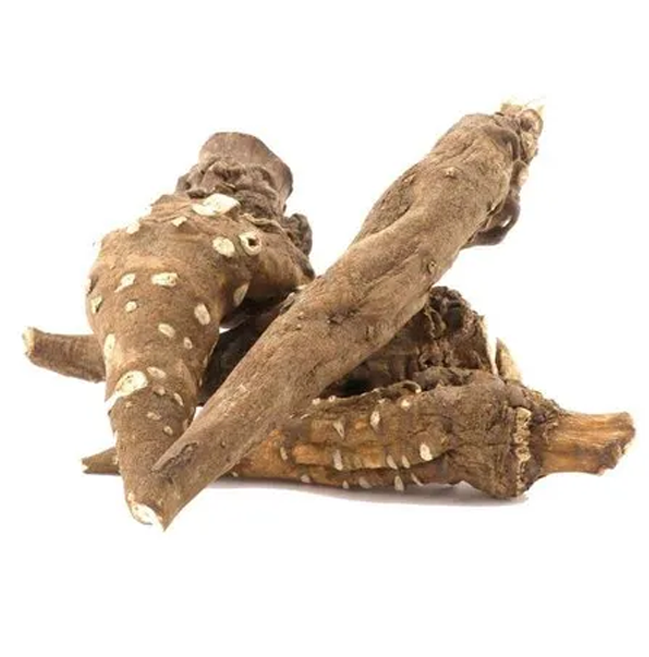
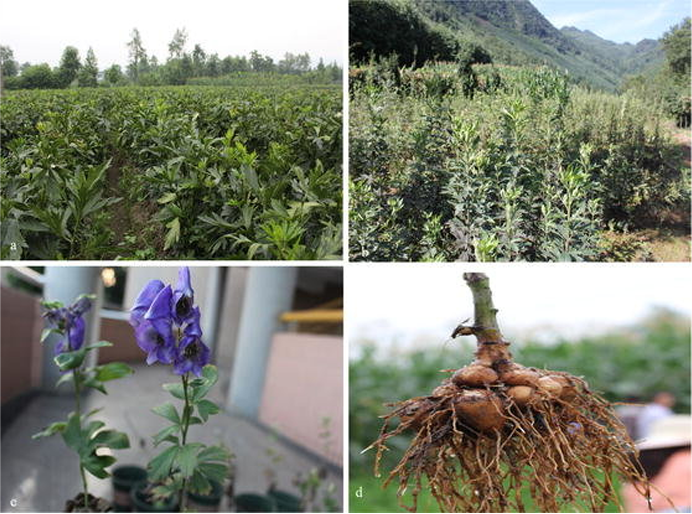
Aconite Root Extract is extracted from Aconitum truncatum, a plant of the Ranunculaceae family. It contains a variety of chemical components, including alkaloids, flavonoids, steroids, and glycosides, with diterpenoid alkaloids being the primary component. Lappaconitine is the primary chemical component of Aconitum truncatum, and its hydrobromide salt exhibits significant analgesic and local anesthetic effects. It is a first-of-its-kind non-addictive analgesic drug developed in China and can be used to treat moderate to severe pain.
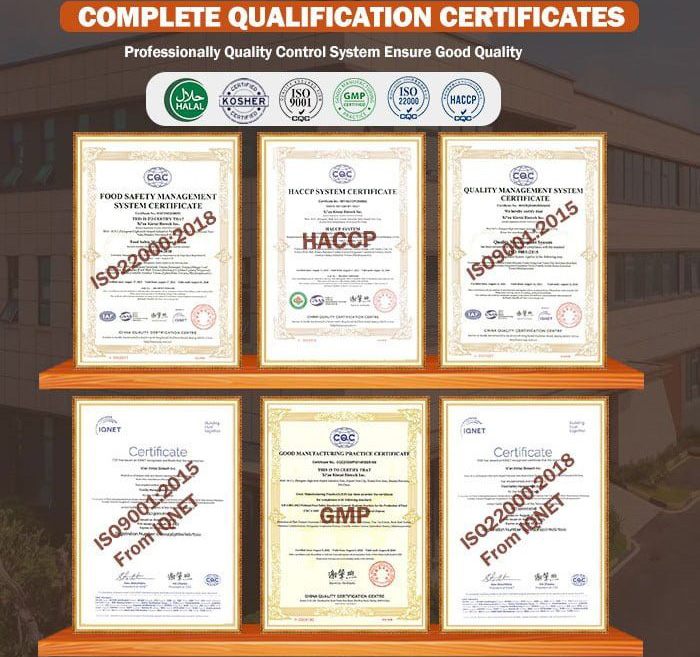
KINTAI is ISO, cGMP and HACCP certified, ensuring the supply of 96% and 98% high quality lappaconitine hydrobromide powder.
Contact us now to get free samples and detailed technical guidance!
Contact us now to get free samples and detailed technical guidance!
Aconite Root Extract Extraction Source Advantages
1. Source Control
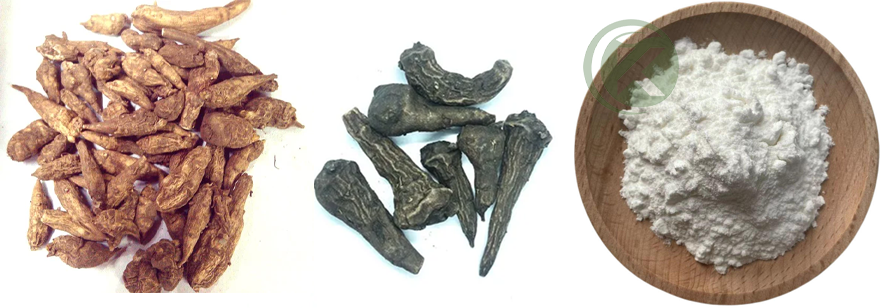
We have established long-term partnerships with standardized Aconitum carmichaelii cultivation bases to ensure the uniformity and high quality of raw materials from the source. Strict harvesting and pretreatment standards lay a solid foundation for the subsequent extraction of high-purity Aconitum carmichaelii hydrobromide.
We have established long-term partnerships with standardized Aconitum carmichaelii cultivation bases to ensure the uniformity and high quality of raw materials from the source. Strict harvesting and pretreatment standards lay a solid foundation for the subsequent extraction of high-purity Aconitum carmichaelii hydrobromide.
2. Stable Active Ingredient Content
Our standardized extraction and refining processes ensure a stable and highly pure content of lappaconitine hydrobromide in the final product. This stability and consistency provide a reliable quality foundation for your formulation development and production.
3. Compliance with Pharmacopoeia-compliant Extraction Requirements
Extraction from Aconitum carmichaelii is a pharmacopoeial and recognized production method, ensuring compliance with current pharmaceutical raw material standards and regulations. We provide high-quality, fully compliant raw materials, ensuring smooth product registration and approval.
Specifications of Aconite Root Extract Lappaconitine Hydrobromide Powder
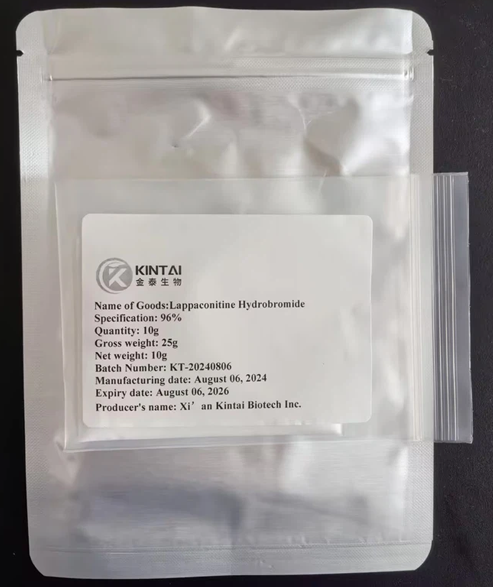
 Contact us
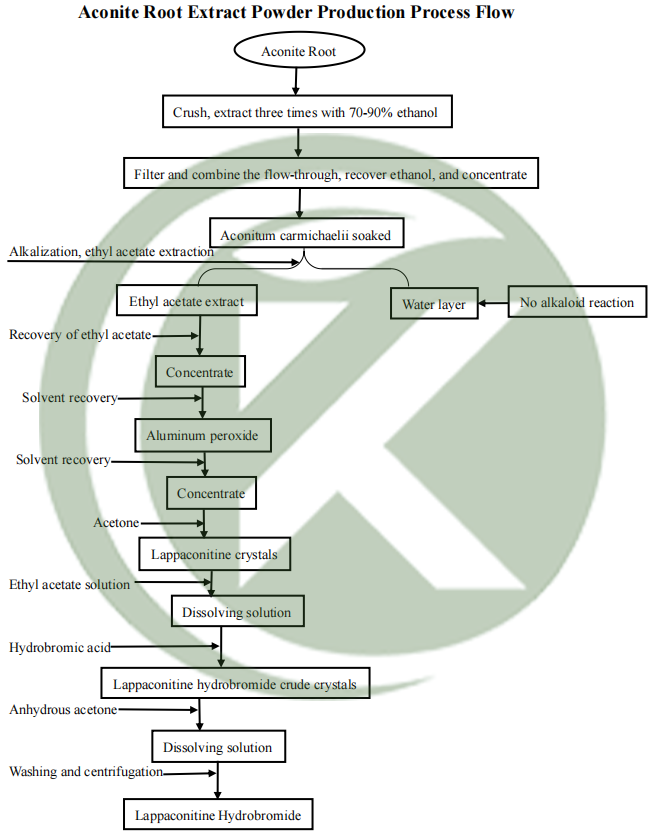
 Aconite Root Extract Powder production Process Flow
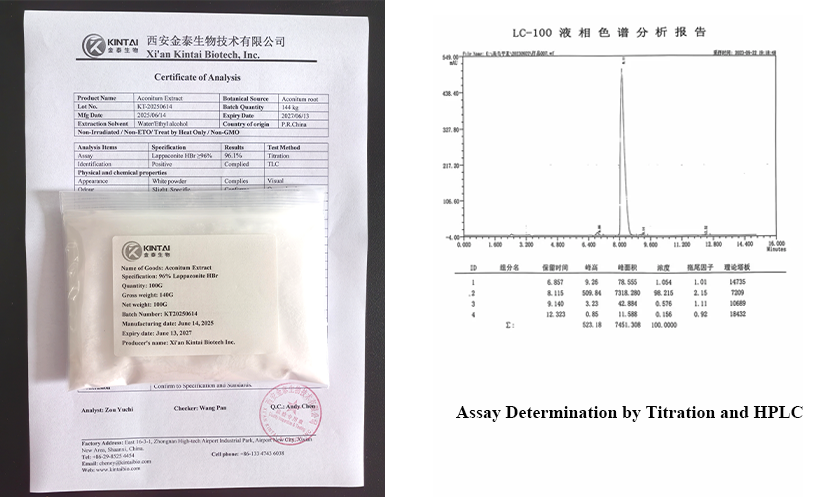
COA of Aconite Root Extract Powder
| Analysis Items | Specifications | Results | Test Method |
|---|---|---|---|
| Assay | Min 96.0% | 96.3% | Titration |
Physical and chemical properties |
|||
Appearance |
White Powder | Conforms | Organoleptic |
| Odour | Slight, Specific | Conforms | Organoleptic |
| Solubility | Soluble in methanol, slightly soluble in water, very slightly soluble in ethanol |
||
Particle Size |
≥100% Through 80 mesh | Conforms | Ch.P.C.Rule 47 |
| Ash | ≤0.5% | 0.2% | Ch.P.C.Rule 2302 |
| Loss on drying | ≤10.0 ppm | 0.41% | Ch.P.C.Rule 52 |
Heavy Metals |
≤10.0 ppm | Conforms | Atomic Absorption |
| Cadmium (Cd) | ≤1 ppm | 0.2 ppm | Atomic Absorption |
| Mercury (Hg) | ≤0.1 ppm | 0.3 ppm | Atomic Absorption |
| Arsenic (As) | ≤2 ppm | 0.3 ppm | Atomic Absorption |
| Lead (Pb) | ≤2 ppm | 0.3 ppm | Atomic Absorption |
Residual Solvents |
|||
-Ethanol |
≤ 5000 PPM | Conforms | Gas Chromatography |
| Microbiological Quality (Total viable aerobic count) |
|||
Total Plate Count, cfu/g |
≤1000 CFU/g | Conforms | Ch.P.C.Rule80 |
| Mold and yeast Count, cfu/g | ≤100 CFU/g | Conforms | Ch.P.C.Rule80 |
| E.coli | Negative | Conforms | Ch.P.C.Rule80 |
| Salmonella | Negative | Conforms | Ch.P.C.Rule80 |
| Staphylococcus aureus | Negative | Curry | Ch.P.C.Rule80 |
| Conclusion | Confirm to Specification and Standards. | ||
Aconite Root Extract Functions
1.Antiarrhythmic Effect
· By regulating the expression of voltage-dependent sodium/potassium ion channels and channel-related protein genes, it reduces myocardial contractility, increases myocardial excitation threshold, and slows or stops the heartbeat.
· It also directly or indirectly inhibits myocardial cell depolarization, reducing the excitability of the cardiac conduction system and thus preventing arrhythmias.
· It also directly or indirectly inhibits myocardial cell depolarization, reducing the excitability of the cardiac conduction system and thus preventing arrhythmias.
2.Enhances Immunity
· It stimulates the proliferation of reticuloendothelial cells and enhances the phagocytic capacity of white blood cells and monocytes and macrophages.
· It can also increase appetite, improve mental state, and elevate immune indicators. It regulates both cells and body fluids, enhancing immunity and improving immune function.
· It can also increase appetite, improve mental state, and elevate immune indicators. It regulates both cells and body fluids, enhancing immunity and improving immune function.

Interactions of Aconite Root Extract with Other Drugs
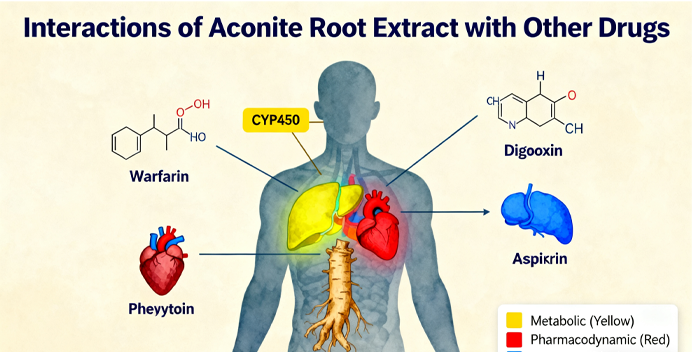
1. Concomitant use with other sodium channel blockers (lidocaine, phenytoin):
May potentiate the effects of Lappaconitine Hydrobromide and increase the risk of neurotoxicity and cardiovascular complications. This combination should generally be avoided or used with caution under close monitoring.
2. Central nervous system (CNS) depressants, sedatives, and alcohol:
Concomitant use can significantly increase sedation and respiratory depression, posing a serious risk to the patient. Strictly abstain from alcohol while taking Lappaconitine Hydrobromide.
3. Anticoagulants (warfarin, heparin):
Lappaconitine hydrobromide may increase the patient's bleeding tendency. Blood coagulation parameters must be closely monitored during use.
4. Monoamine oxidase (MAO) inhibitors and certain antidepressants:
Concomitant use is not recommended because it may cause adverse reactions and reduce the effectiveness of both drugs.
5. Other antiarrhythmic drugs:
Concomitant use (especially Class I drugs) may enhance proarrhythmic effects and worsen arrhythmias. Extreme caution and electrocardiographic (ECG) monitoring are required.
6. Diuretics:
Interactions should be cautious as some diuretics may affect electrolyte balance and interfere with the effect of lappaconitine hydrobromide.
7.Antihypertensive drugs:
Combination use with certain antihypertensive drugs may enhance the antihypertensive effect. Regular monitoring of the patient's blood pressure is required.
8.Nonsteroidal anti-inflammatory drugs (NSAIDs):
NSAIDs may affect renal function, which may indirectly affect the clearance and metabolism of Allaforte.
Reference:
https://pillintrip.com/medicine/allaforte
Recommended Dosage of Aconite Root Extract
| Application Forms | Usage | Standard Dose | Maximum Dose | Key Notes |
|---|---|---|---|---|
Tablet |
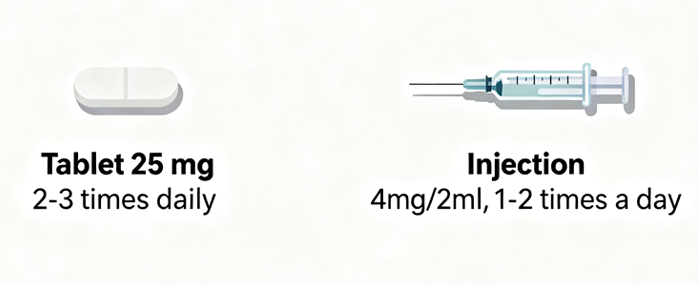
Take orally, take with warm water after meals | Starting dose: 25 mg 2-3 times daily; Can be increased to 50 mg every 6-8 hours | The total daily dose should not exceed 300 mg | Do not chew or crush;
Use with caution in patients with hepatic or renal impairment and adjust the dose. |
Injection |
Intramuscular injection or intravenous drip | Usual dose: 4mg/2ml, 1-2 times a day | Determined by the doctor based on the condition | For use only by qualified medical personnel in hospitals or under strict medical supervision |
Notes: The above is a reference for routine dosage. The specific course of treatment and dosage must strictly follow the doctor's instructions and be individualized according to personal condition and treatment response.
Where to Buy Aconite Root Extract Powder
Buy Aconite Root Extract Powder - Choose Kintainutri® Factory
✅ Free Samples Available
✅ ISO/GMP/HACCP certified production
✅ Third-party purity testing reports
✅ Customizable particle size & packaging
✅ Competitive Lappaconitine Hydrobromide Powder price with volume discountsIf our products have sparked your interest, please feel free to contact us for competitive product quotes, free samples, and professional technical support.You can contact us via email at: natural@kintaibio.com or visit our official website for more product information!
fAQ
1.Is it safe for people with impaired liver and kidney function?
No. Impaired liver and kidney function can affect drug metabolism and excretion, increasing the risk of toxicity. A doctor should evaluate and adjust the dosage or prohibit use.
2.How can I identify interactions with existing medications?
You should provide your prescribing physician or pharmacist with a list of all medications you are currently taking (including prescription drugs, over-the-counter drugs, and supplements) for their professional evaluation.
3.Can I drink alcohol while taking this medication?
It is strictly recommended to avoid alcohol as it can significantly exacerbate the sedative and respiratory depressant effects of CNS depressants, posing serious risks.
4.Why are children, pregnant women, and breastfeeding women prohibited from using this medication?
This is based on safety and risk considerations, often due to a lack of sufficient clinical data to demonstrate safety in these special populations (such as fetuses, infants, or growing children).